

Not every brand walks into a room full of advertisers as an outsider. Mozilla Ads did exactly that at Advertising Week, and instead of blending in, they built their entire presence around one powerful idea: trust. The result was one of the most talked-about activations of the week.
Mozilla Ads at Advertising Week
When it comes to event marketing, we always say that creating an experience that resonates is key. But how do you design an activation that not only captures attention but also reinforces your core brand message? Mozilla Ads approached this at Advertising Week by looking at their learnings from their first participation in 2024, to making the shift and building their strategy around a single, powerful emotion: trust.
Mozilla historically had been known primarily as the company that built the browser famous for BLOCKING ads. They aren’t traditionally seen as part of the advertising establishment, let alone a brand that would anchor one of Advertising Week’s most talked-about activations. That contrast makes the response to Mozilla Ads’ 2025 presence all the more unexpected.
The result? A cohesive and impactful presence that got attendees engaging and generated notable brand awareness. Let’s break down how they achieved this.
The Challenge: From Minimal Presence to Stronger Engagement
Mozilla’s first appearance at Advertising Week in 2024 offered valuable insights. They sponsored a track and secured a speaking opportunity, but their physical presence was modest, centered around a meeting pod and casual swag distribution. While effective for initial visibility, it didn’t fully showcase the depth of their story across the week.
This experience clarified the opportunity for a more consistent and immersive presence. For their return, the goal shifted from simply participating to building a cohesive, connected program that would engage attendees at every touchpoint.
"Last year was the first time Mozilla had ever shown up at an advertising industry event... This year we wanted to have a better persistent physical footprint to continue to engage with attendees." – Bryce Weitzel, Sr. Product Marketing Manager, Mozilla Ads
This year brought changes. With a new "Mozilla Ads" sub-brand, a refreshed logo, and a clear messaging pillar centered on brand trust, the team had a story to tell. The challenge was to deliver that story in a way that stood out amid a busy industry event.
The Strategy: Building an Ecosystem of Trust
Mozilla’s strategy was to integrate the theme of brand trust into every aspect of their presence at Advertising Week. This was more than a simple tagline; it was the guiding principle for their panel discussion, physical activation, and social media content.
Central to their presence was not just a new data set, but a new narrative Mozilla Ads was actively introducing to the industry: that trust is not just a brand value — it is a performance driver. To ground that idea in proof, Mozilla commissioned a Brand Trust Study with Advertising Week, surveying marketers on the importance of advertising in trusted environments. The findings became the backbone of Mozilla Ads' on-stage panel discussion, giving the trust-drives-performance story both data and industry authority.
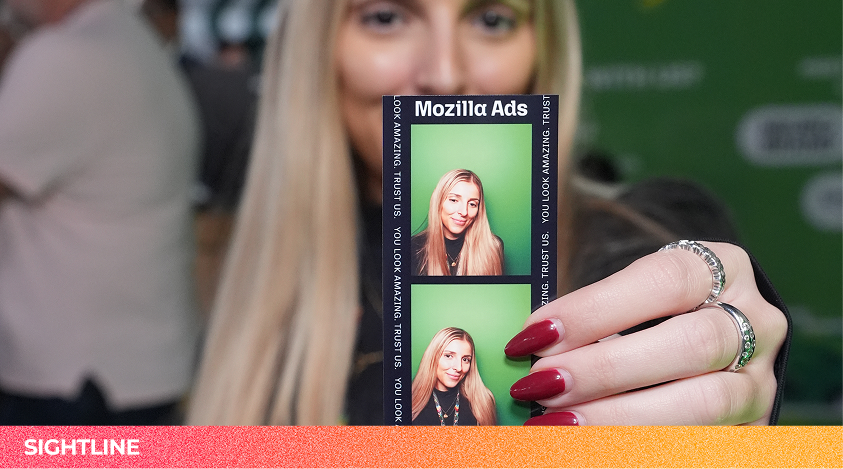
A key element was their physical activation: a photo booth designed to be fun, engaging, and—most importantly—trustworthy.
The Activation: A Photo Booth with No Strings Attached
Instead of going with a hard sales pitch, Mozilla created a positive experience. The photo booth was designed to be inviting, with lighthearted copy like, “Trust us, you look amazing.”
Here’s what contributed to its effectiveness:
- A No-Pressure Environment: The focus was on helping people enjoy themselves. Brand ambassadors were friendly and welcoming, making sure attendees were comfortable. Sales discussions only happened if attendees asked for details.
- Quality Giveaways: Attendees played a scratch-off game to win premium swag, such as disposable cameras and silk eye masks that read “dreaming of incremental reach”, on brand for the audience. . This added a sense of fun and generosity with no obligation.
- Trust in Action: The experience put trust into practice. Attendees could collect printed photo strips immediately and giving an email was optional. There was no hidden motive or gated demos/experiences—just an enjoyable activity that left visitors with a positive impression.
"There was no hidden agenda with our activation... We wanted to raise awareness about Mozilla Ads by creating a fun and engaging experience without the pressure of gated demos or aggressive lead gen tactics. We heard from a lot of people that they had been told by friends that they should come check it out." - Bryce, Mozilla Ads
This approach encouraged word-of-mouth sharing and positioned Mozilla Ads as a brand that is approachable and user-friendly.
The Results: Increased Awareness and Engagement
While direct ROI from events can be hard to measure, Mozilla’s focused approach delivered clear results - walking away from Advertising Week no longer perceived as an ‘industry outsider’, but as a credible, trust-first platform shaping the next phase of how advertising can work. Their trust-centric strategy led to:
- Increased Brand Awareness: Launching the Mozilla Ads brand, social channels, and updated website came together at the event, boosting awareness. The team conducted brand lift studies before and after to track perception changes.
- Strong Social Media Engagement: The on-site experience—including street-style interviews about brand trust—helped fuel their new social channels with engaging content, expanding their reach well beyond the event.
- Positive Attendee Feedback: The booth became a popular stop. Attendees recommended it to friends, and social media posts reflected positive experiences, with some noting how "trust was present at every touch point."
"People walked away feeling good about Mozilla Ads... we met people that really understood what we were offering without the sales pitch." - Hannah Bullion, Mozilla Ads Social Media Manager.
Key Takeaway for Marketers
Mozilla’s approach at Advertising Week offers a practical example for experiential marketers: Decide what feeling you want your audience to leave with and design your strategy around that emotion.
For Mozilla, that feeling was trust. By moving beyond basic brand visibility and crafting an experience rooted in a clear, authentic message, they went beyond just capturing attention—they earned it. They demonstrated that leading with authenticity and value can foster genuine brand affinity and make an impactful impression that lasts well beyond the event.
Enjoyed this article? Subscribe to SIGHTLINE for more.
Get member-only content, our monthly newsletter, and full quarterly publications created for marketers who shape brand experiences.

Comments