

Recently, Lightspeed surveyed US shoppers about what they really want from retail. They told us they’re craving in person experiences that make them feel valued. Despite the tech-heavy world we live in, 82% of them reported they would shop more often if they were offered in-store perks.
But don't be fooled—this isn't exclusive to B2C retail. B2B buyers value the same sense of recognition and personal connection as any consumer.
This is exactly why we took Lightspeed Edge, an industry night dedicated to communication and connection, to The National Retail Federation’s (NRF) Big Show. Anyone who’s attended NRF knows why it’s dubbed the “big” show. With over 40,000 attendees, the event is massive.
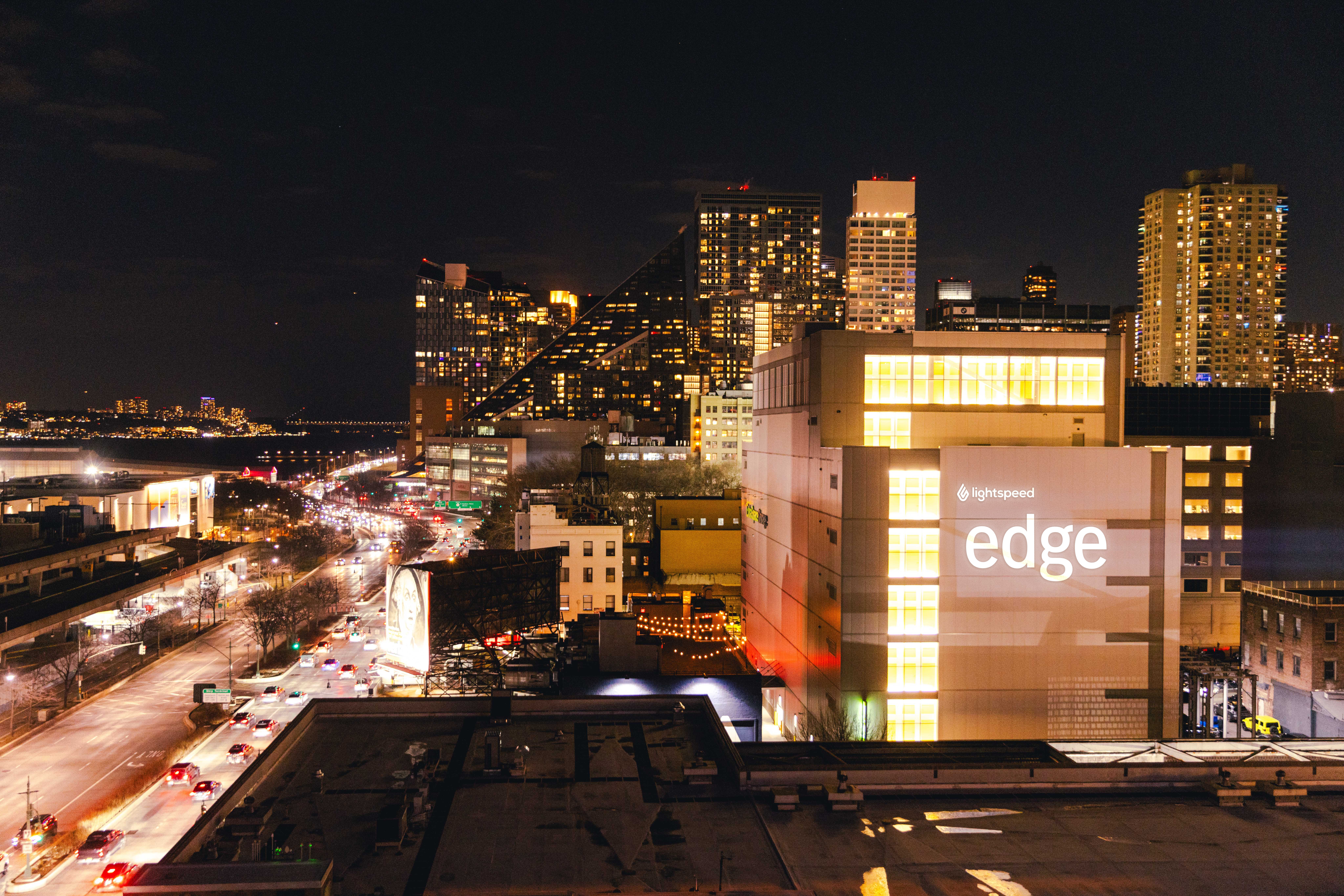
And while such industry events are vital for visibility, the sheer scale of the convention can feel like a barrier to deep relationship-building. The real magic happens when you take that initial spark from the crowded expo floor and move it into a more intentional, distraction-free space where a true partnership can actually breathe. Our mission was to bridge the gap between high-level education and human connection.
The big picture: the event sub-brand
To make a lasting impact, we knew we had to move away from one-off corporate parties. For a company of Lightspeed's scale, event marketing must be an investment in long-term brand equity.
This led to the birth of Edge—a modular global sub-brand that structures both digital and in-person industry events across regions and products. Anchored in our latest product innovations, Edge draws brands like Apple that have successfully turned innovation activations into must-attend fixtures that connect customers to both the technology and the people behind it.
To ensure Edge felt consistent across every market, we needed a system that could scale without losing its soul.
Take the design philosophy, for example; to anchor the sub-brand visually, we introduced what we call the Nucleus. This is a circular gradient built from our core brand colors, representing Lightspeed as the center of the Edge series.
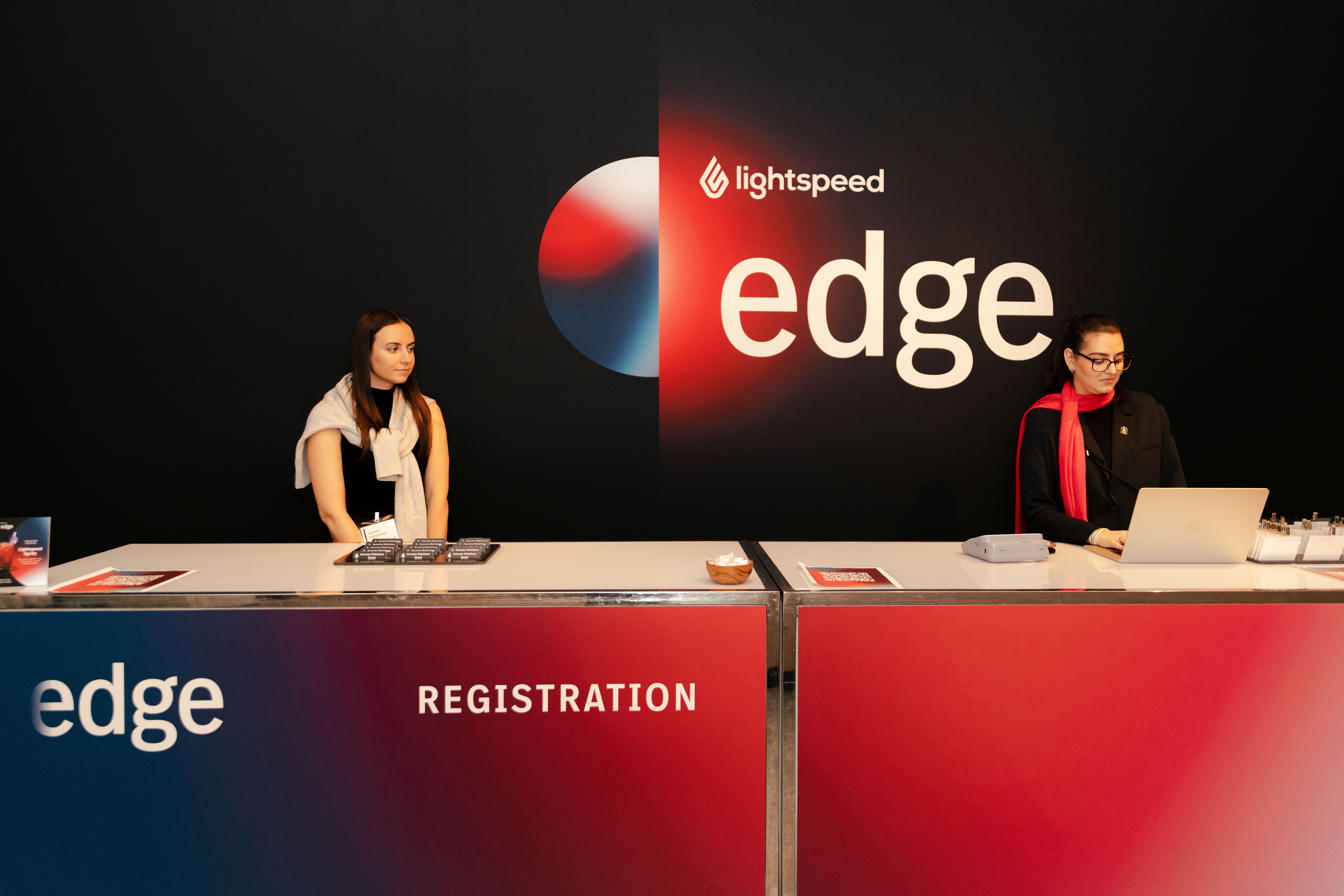
Our creative team approached this with what we call the Dough and Cookies philosophy, where the design concept is like the dough, while each event is a separate batch of cookies. They have their own shapes, but they all keep the same flavor.
By building a flexible design system rather than a fixed look, we ensured the Edge concept felt modern and innovative enough to resonate across different regions simultaneously, even when adapted to different contexts.
The details: Edge NYC
In both retail and technology, a premium brand is defined by its details, not just its logo. My philosophy is simple: if we show our customers that we care about the small things, they know they can trust us with the big things: their entire business ecosystem.
We approached every part of the night with that in mind. We focused on securing a venue that would surprise and delight, an aspirational space guests would otherwise not have the opportunity to attend. For convenience, it was close to the tradeshow floor, but being away from the convention centre helped make the night feel exclusive—especially as we could totally transform the space to reflect Edge.
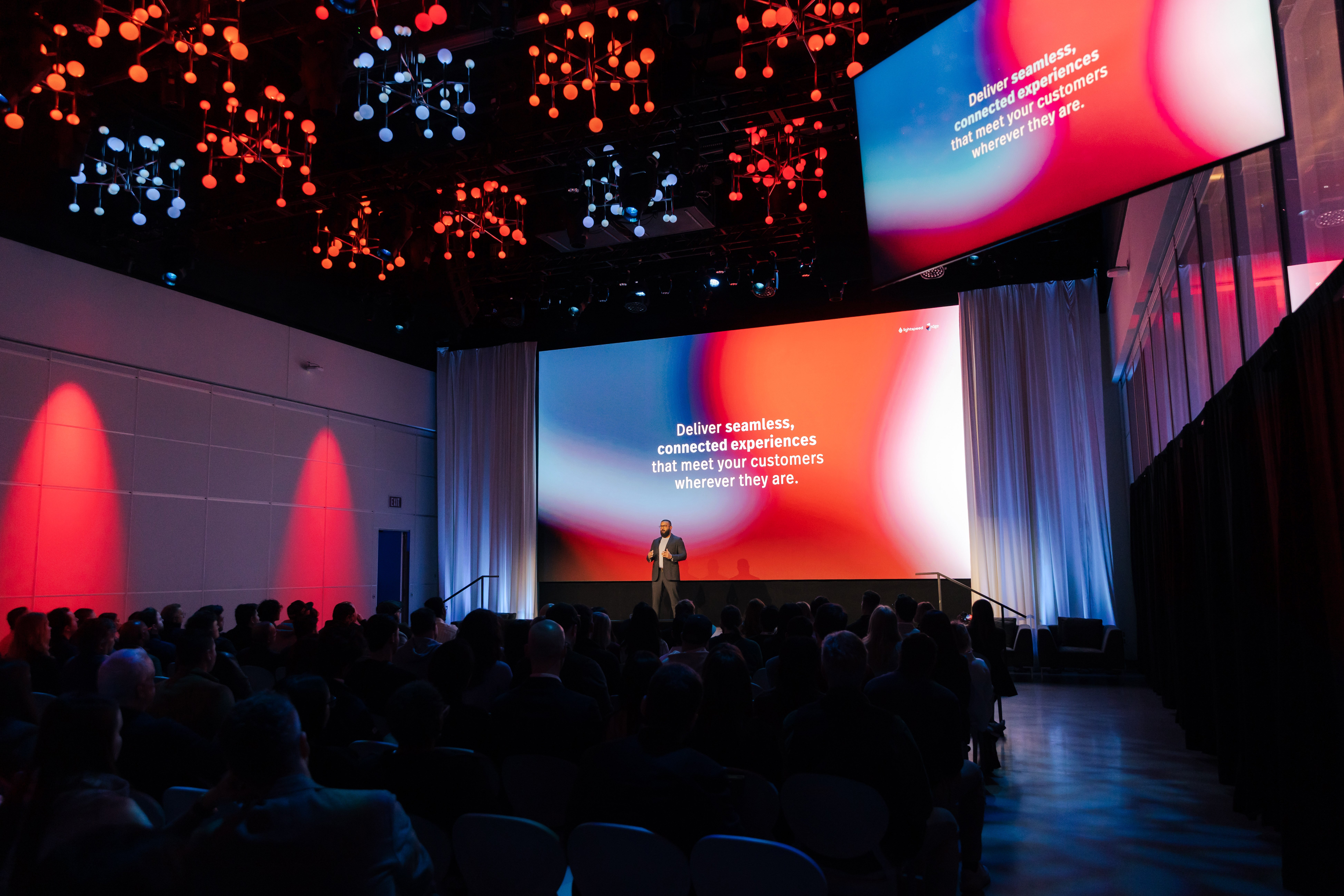
Given such a thoughtful venue, every touchpoint had to match that same level of intention and polish. The night needed to feel premium and elevated to reflect the actual experience people would have. Edge allowed us to continue our wider NRF campaign—revolutionary retail tech as the POS with wholesale built right in—but in a more personal, intimate venue.
This environment allowed us to continue our wholesale narrative through activations that felt authentically Lightspeed, operating free from trade show constraints to provide a seamless, intentional journey for every guest.
Lightspeed Edge was about creating a space where our community could engage directly with Lightspeed executives, collaborate with partners and get hands-on experience with the technology they’d just seen on stage. By stepping outside the booth, we moved away from transactional interactions and toward genuine partnership.
Beyond the scheduled programming, we focused on elements that compound to create an atmosphere that feels premium and fun. Our team truly sweated the details, from custom-branded napkins and waitstaff in tailored Lightspeed aprons to the Lightspeed Spritz—our signature branded cocktail for the evening.

We also wanted to move away from generic swag in favor of something more personal. We gifted every guest a customizable tote bag, allowing them to create a one-of-one memento.
This attention to detail sparked a significant shift in how we measure success. We moved the needle from traditional ROI metrics, like booth scans, toward deep, relationship-based engagement. When you prioritize the human experience, the business results follow naturally.

The takeaway for the B2B playbook? Stop counting leads and start measuring moments of connection.
If you want to own the big things in your industry, start by obsessing over the small ones.
Executing an event of this scale demands a mastery of the buffer. If there is one piece of advice I can offer leaders looking to revitalize their physical touchpoints, it is this: time is your most precious commodity. So, plan ahead, and then add a buffer on top of that. Events like Edge are inherently complex, and giving yourself a long runway is critical for developing ideas and collaborating effectively across global teams.
However, preparation is only half the battle. In high-stakes activations, flexibility is a requirement, not an option. Don’t resist change—expect it. The best planners don't panic when last-minute pivots occur; they embrace them. Rather than focusing on why things aren't going exactly as scripted, stay adaptable.
Pulling off an escape like Edge is incredibly challenging, but when you allow yourself the grace to pivot, the result is infinitely more rewarding and authentic. This is particularly true for in-person events, which share similar rules with great retail: the experience is physical, emotional and remembered long after the transaction ends.
Photo Credits: Lightspeed

Comments