

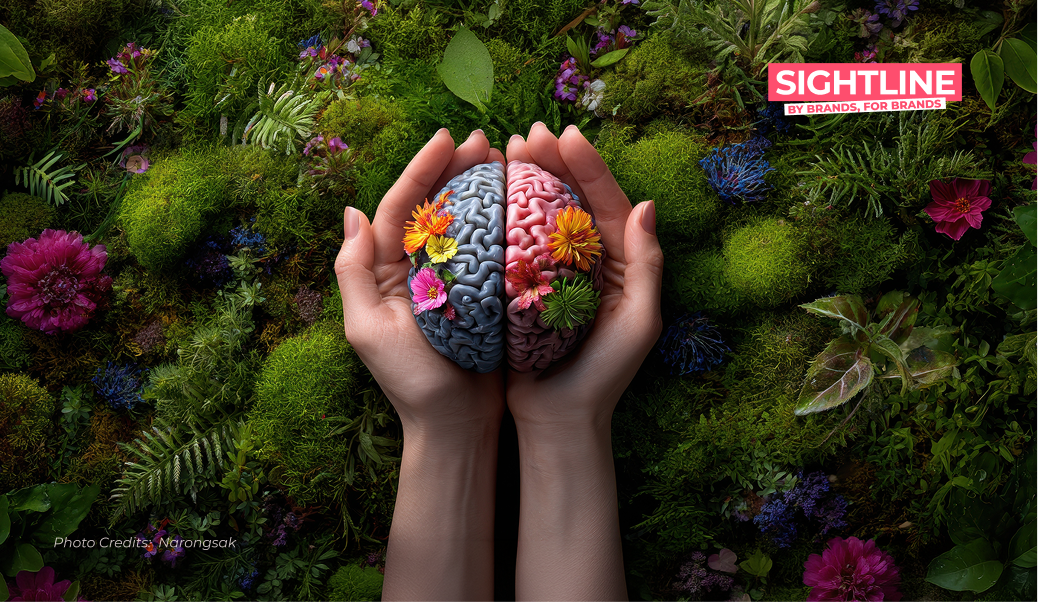
Discover how marketing leaders use cognitive science and memory structures to drive live brand marketing success. Learn actionable insights from MetLife's CMO Michael Roberts.
Ever wonder what makes a marketing campaign truly unforgettable? The secret lies in the brain.
Neuroscience offers a powerful lens for marketing leaders, revealing how human brains process information, form memories, and make decisions. By tapping into the subconscious mind and building positive memory structures, brands can create powerful emotional engagement and live experiences that deliver measurable commercial outcomes.
Marketing teams dedicate countless hours to creative concepts, media plans, and campaign performance. Yet, the driving force behind every impression, click, purchase, and brand interaction is the human brain.
We all know that in a world saturated with thousands of daily messages, earning consumer attention is the ultimate prize. The key is to move beyond simply reaching audiences and start truly connecting with them.
In a recent episode of the SIGHTLINE Live podcast, Michael Roberts, Chief Marketing Officer at MetLife, explored the fascinating intersection of neuroscience and marketing. Roberts shared a vital insight for experiential leaders and CMOs: the most effective campaigns are built around people, rather than products. Understanding how the brain works helps marketers craft experiences that are easier to process, remember, and feel. Because before someone buys, they first pay attention.
How does the subconscious mind influence purchasing decisions?
One of the biggest misconceptions in marketing is that people make rational decisions and then justify them emotionally. In reality, the opposite is frequently true.
According to Michael Roberts on SIGHTLINE Live, cognitive science proves that the subconscious mind heavily influences our behaviors. The subconscious contains a mix of both rational and emotional associations. While data and product features matter, these underlying emotional and functional connections determine which brand stays top of mind. People may forget statistics, but they rarely forget how a brand made them feel.
This creates an important challenge for business leaders. Marketing professionals must explain their value proposition in a way that requires less effort from the audience. When messages are simple, clear, and relevant, audiences understand and recall them easily.
How can experiential leaders use memory structures to build brand loyalty?
Live events create something that digital advertising often struggles to replicate: deep emotional engagement. When people attend a live experience, they are immersed in an environment that activates multiple senses simultaneously.
To turn events into content engines and powerful brand amplifiers, marketers need to target human memory structures. Roberts outlines three key ways experiential marketing can successfully build these structures:
- Relevance: Ensure your brand creates more positive associations than negative ones within the customer's mind.
- For example, if you're a sustainable fashion brand hosting a pop-up, you could offer a free mending service for any piece of clothing. This positive, helpful interaction directly links your brand to sustainability and customer care, overcoming potential negative biases about the cost or durability of eco-friendly products.
- Salience: Expand the brand's footprint in the customer's memory structure. A well-designed live event fills in missing nodes, creating a richer mental footprint.
- For instance, a beverage company launching a new energy drink could sponsor a series of local music festivals. By associating the drink with vibrant, high-energy experiences, the brand becomes more memorable and is more likely to be recalled when a customer is looking for a refreshment at a social event, not just when they are in the grocery store aisle.
- Distinctiveness: Provide clarity so the brand stands out effortlessly.
- For example, instead of a standard booth at a trade show, an anlytics company could create an immersive data visualization room that turns attendees' own movement into a live art installation. This unique, memorable experience ensures customers easily differentiate the brand's innovative approach from the more traditional presentations of its competitors.
Choose large, globally recognized sponsorships if broad physical availability and massive salience matter most to your brand goals. For instance, MetLife secured naming rights to MetLife Stadium to maintain global visibility and physical presence for an intangible insurance product. Conversely, choose small, intimate events if you need to build distinctiveness and clarity with a highly targeted demographic.
The future of live brand marketing is undeniably human
As technology evolves and AI becomes increasingly integrated into marketing workflows, understanding human behavior becomes even more important. AI-driven insights can help marketers measure performance, and automation tools help teams move faster. However, technology cannot replace a deep understanding of how people think, feel, remember, and decide.
The marketers who thrive in the years ahead will combine technology with psychology, creativity with science, and strategy with empathy. Marketing has always been about understanding people. The most successful brands compete for attention, emotion, memory, and trust. All four begin in the brain.
Frequently Asked Questions (FAQ)
What is the role of cognitive science in live brand marketing?
Cognitive science helps marketers understand the conscious and subconscious drivers of human behavior. By applying neuroscience principles, marketing teams can design live events that build positive memory structures, making the brand easier to recall and trust during the buying process.
How do you measure the ROI of experiential marketing and sponsorships?
Marketers measure sponsorship success by analyzing how the event integrates into the end-to-end customer journey. Instead of looking solely at immediate transactional returns, leaders evaluate how the live experience creates brand reach, overcomes negative associations, and supports broader commercial outcomes over time.
Are emotional or rational appeals better for event marketing?
Neither approach is strictly better on its own. The subconscious mind uses a combination of functional and emotional associations to make decisions. Successful event marketing influences both types of associations simultaneously, ensuring the brand appeals to the customer's logic while strongly resonating with their feelings.
Enjoyed this article? Sign up to the SIGHTLINE newsletter.
Every week, essential insights on experiential and live brand marketing. Delivered straight to your inbox.

Comments