

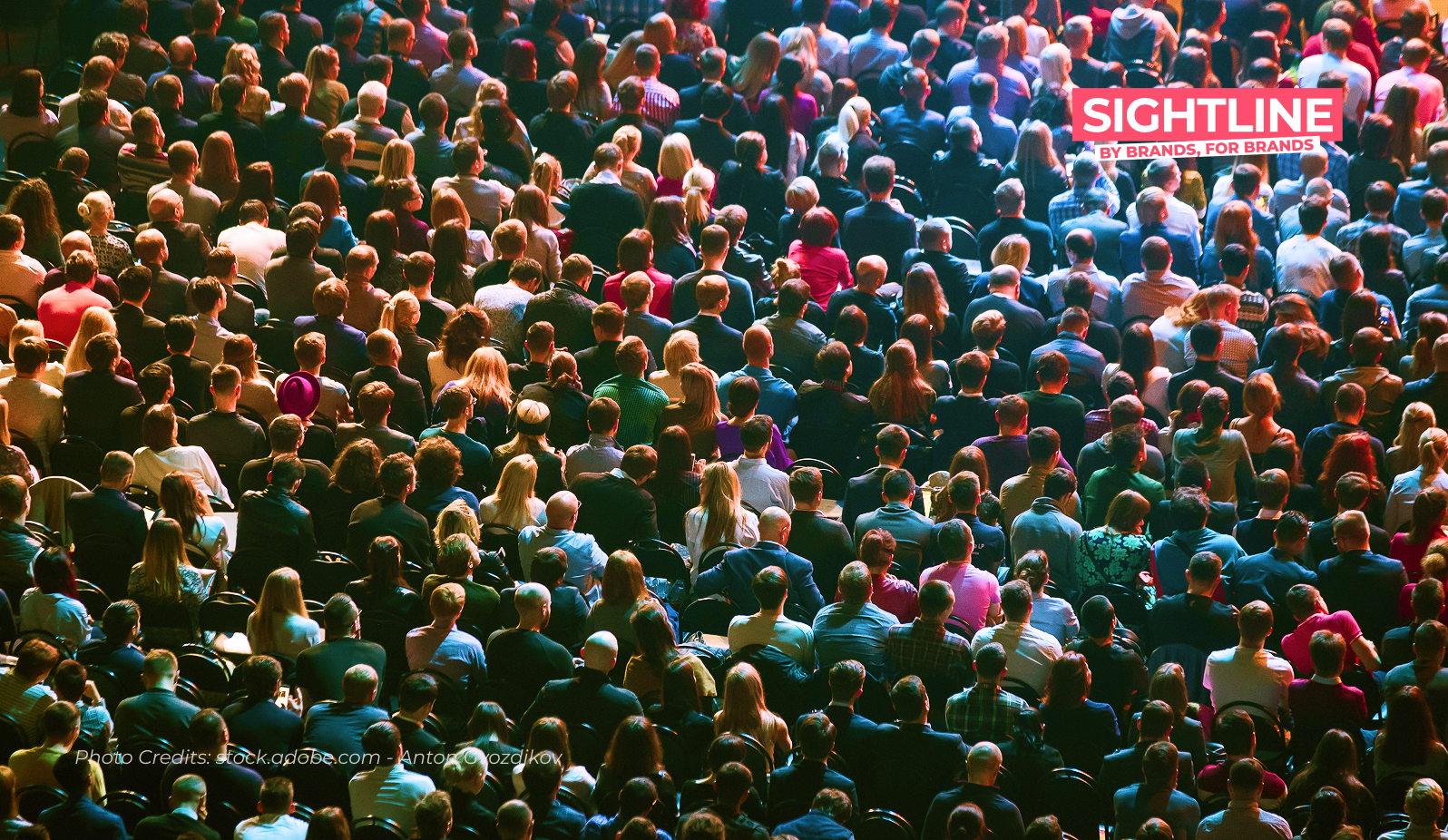
Experiential marketers dedicate months of effort into crafting out speaker selection, agendas, content and activations. However, some of the most important elements leading to an event's success don't even have anything to do with what is happening onstage.
Benja Juster, Lead Creative Producer of Global Events at HubSpot, presented his own approach to event design and explained a number of its main principles in a recent episode of SIGHTLINE LIVE. It turned out that there is a whole playbook based around audience curation, audience participation and community building.
Here are the techniques marketers need to consider to build events that foster stronger connections.
#1: Think Like an Experiential Producer, Not an Event Manager
One of the most intriguing parts of the discussion was the difference that Juster pointed out between an event manager and an experiential producer.
Whereas event managers set up the structure of an event, the experiential producers pay attention to the social architecture within the room. They consider how people will interact with each other, what type of interaction is going to take place and what makes it possible.
This approach changes everything about the event planning. It affects all the decisions and all the details such as room layout, crowd selection, content and networking space.
#2: Build Community Before the Event Begins
Prior to his job at HubSpot, Juster gained extensive experience in organizing underground art and music events in San Francisco Bay Area. Notwithstanding the discrepancy between the sizes of events, that experience still inspires him when he designs event today.
What is the main takeaway from those years? A community cannot form once people enter the event area. It is important for them to have a connection to an event prior to its start. People feel a certain curiosity, anticipation, and belonging way before the first session begins.
It goes without saying that marketing of such events implies more than just promotion of the event itself. It also includes content creation, behind-the-scenes stories, building communities, and interaction with the audience.
#3: Curate the People in the Room as Carefully as You Curate the Content
One concept that was quite interesting about the conversation was Juster’s approach towards the attendees.
He classifies the attendees into the following groups:
- Super catalysts – the individuals who naturally create energy and connect people.
- Absorbers – the individuals who listen, learn and build conversations.
- Stabilizers – the individuals who support the culture and the rhythm of the meeting.
Event speaker selection, content generation, and programming all contribute significantly to the event planning process. Juster takes the process further by emphasizing the importance of the right audience composition.
The attendees in the room matter. Having the right balance of attendees will ensure creation of energy that goes beyond the agenda of the event. This will not only increase the value of the discussions that take place but also ensure continued building of relationships post the event.
It is a very simple concept; however, something that many marketers tend to overlook. Community is created based on its members, which makes audience curation as important as content curation.
#4: Create Experiences People Can Participate In
Agency was yet another concept that repeatedly surfaced during the discussion. It is in our nature to crave experiences that let us actively engage, share, and socialize with others. These concepts manifest themselves in various ways. For instance, it could be a peer-to-peer learning experience, co-learning workshop, audience engagement sessions, or interactive activation that lets individuals actively engage and help shape the experience together with the brand.
For example, Juster talked about experiences like Brain Date that create a chance for participants to socialize and interact using their knowledge and conversations as opposed to being passive and attending another presentation.
Participation allows creating an emotional connection as one becomes the part of the experience. These are the moments that are remembered and further shared by attendees even when the event is over. The best experiences are those that bring value to the individual through relationships, perspectives, or a sense of belonging.
#5: Turn Events Into Communities That Outlast the Agenda
Among other interesting observations Juster made is that an event shouldn't be considered an isolated point in time. An event has started moving beyond a few days of content and is transforming into a platform where content is produced, connections are strengthened and dialogue continues.
This transformation provides opportunities for brands. An event can produce content for various channels, build relationships between participants and generate value even after the last session has taken place.
The best experiential marketers have begun seeing beyond an event itself. They see an ecosystem around an event. In the future, experiential marketing will be all about building communities rather than organizing events.
Enjoyed this article? Sign up to the SIGHTLINE newsletter.
Every week, essential insights on experiential and live brand marketing. Delivered straight to your inbox.

Comments